Wishlist
What really matters—and what you can ignore
Focus on four practical decision points: safety (risk of choking or injury), control during walks, fit/comfort for your dog, and the behavior or health reasons behind the choice. Ignore broad claims like “harnesses are always better” or product buzzwords without context—what fits a nervous, fragile 6‑pound dog differs from what works for an energetic 18‑pound terrier.
Quick answer up front
If your primary concern is preventing neck injury, escaping, or managing pulling, a properly fitted small dog harness is usually better. If you simply need an everyday ID holder and your dog walks politely without pulling, a lightweight collar can be fine. The remainder of the article explains why and how to choose between them.
How to weigh the trade-offs
Safety: choking, trachea risk, and fragile necks
Small breeds often have delicate tracheas. A collar concentrates force on the neck—sudden pulls can cause coughing, throat injury, or long‑term damage. Harnesses distribute force across the chest and back, reducing neck strain. For dogs with collapsing trachea, recent neck surgery, or tiny fragile necks (e.g., Yorkies, Chihuahuas), choose a harness.
Control and leash handling
Harnesses offer superior control for dogs that pull, lunge, or are easily excited because they anchor at the chest or back. Front‑clip, no‑pull harnesses (chest attachment) steer the dog toward you and reduce forward momentum; back‑clip harnesses are easier to use for calm walkers. Collars give limited control for pulling dogs and can encourage upward force that triggers pulling behavior.
Fit, comfort and movement
A poorly fitted harness rubs under the armpits, restricts shoulder movement, or chafes. Collars can be lightweight and comfortable when sized correctly, but they must be snug enough to prevent slipping without choking. Measure chest girth and neck girth before buying a harness—many small dogs need an S or XS with a range of measurements, not just “small.”
Escape risk and temperament
Some small dogs are skilled at wriggling out of collars or simple harnesses. Step‑in harnesses or multi‑strap harnesses with secure buckles reduce escape risk. If your dog is a known escape artist, prioritize harness designs with at least two points of adjustment and a snug chest plate rather than a loose single-strap system.
Training and behavior goals
Use a collar for ID and basic leash manners if the dog already walks well. For teaching loose‑leash walking or correcting pulling, pair a front‑clip harness with positive reinforcement. Avoid punitive tightening collars or choke chains—these can worsen reactivity and harm small dogs.
Medical or age considerations
Puppies with soft bones, senior dogs with neck arthritis, or dogs recovering from neck surgery should use harnesses to avoid neck strain. Conversely, dogs with certain shoulder injuries may find some harness designs restrictive—consult your vet if your dog has chronic orthopedic issues.
Which harness or collar style fits which situation?
- Active puller or reactive walker: Front‑clip no‑pull harness (reduces pulling and redirects).
- Polite walker who needs ID: Lightweight flat collar with ID tag. Use harness for car travel and added safety.
- Escape‑prone small dog: Multi‑strap or escape‑proof harness with two buckles and snug fit.
- Puppy learning leash manners: Soft harness that won’t choke; combine with short, frequent training sessions.
- Seniors or respiratory issues: Padded chest harness to avoid neck pressure.
Choosing and fitting the gear: practical steps
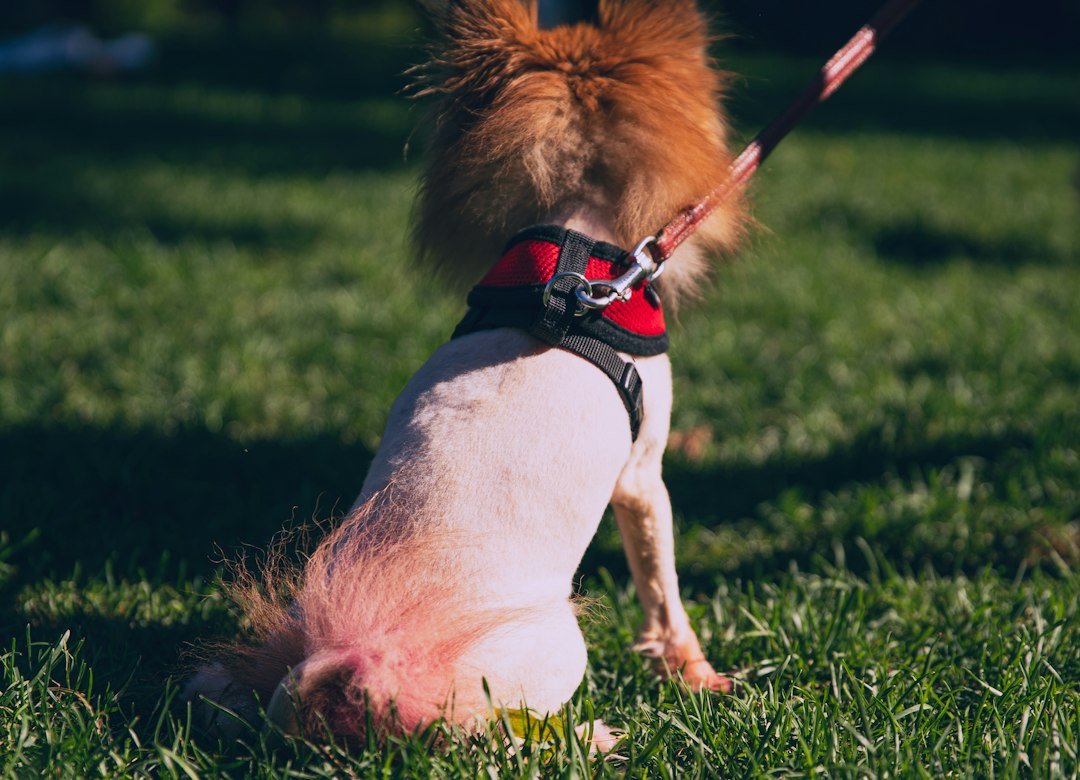
Measure first: chest girth (widest point behind the front legs) and neck girth with a soft tape. For harnesses, pick a model that lists those ranges—don’t guess by breed alone. When fitting, you should be able to slide two fingers under the strap at the chest and neck points; check for rubbing after a short walk and adjust if needed.
Materials, clips and leash attachment
Look for padded straps at pressure points, sturdy buckles (not weak plastic for escape‑risk dogs), and reinforced D‑rings. For no‑pull needs, front and back clip options can offer flexibility: use the front clip for training, switch to the back clip for calm walks. Avoid harnesses that force the dog’s shoulders into an unnatural position.
Store recommendation that fits most small-dog needs
For a reliable, widely suitable small dog harness, consider the top store match: a small dog harness and leash set that lists neck and chest ranges for S size and features secure buckles—good for owners who need one product that balances fit, comfort, and control.
When to keep both
Many owners use both: a collar for ID and a harness for walks and travel. That offers convenience (ID always on dog) plus safety when outdoors. Make sure the collar is snug but not tight so it won’t slip over the head when the dog pulls.
Common mistakes to avoid
- Buying by “small” label alone—measure the dog.
- Using a loose harness that allows shoulder restriction or escape.
- Relying on a collar for a dog that pulls or has neck issues.
- Forgetting to check for chafing after 10–15 minutes; adjust or pad if needed.
Final guidance by owner profile
- Busy city walker with a strong‑pulling terrier: Front‑clip no‑pull harness + sturdy leash.
- Calm apartment dog who never pulls: Flat collar with ID + optional back‑clip harness for travel.
- Active senior or small breed with throat issues: Padded chest harness only; avoid neck pressure.
- New puppy: Soft, adjustable harness for early walks; collar added later for ID.
- Measure neck and chest girth—don’t guess by weight alone.
- Decide if control (no‑pull) or minimalism (ID only) is the priority.
- Inspect buckles, D‑rings, and padding—avoid flimsy hardware for escape‑prone dogs.
- Try the harness indoors first and watch for rubbing during a 10‑minute session.
- Keep both collar (with ID) and harness for different uses when appropriate.
A properly fitted small dog harness is the safer, more versatile choice for dogs that pull, have fragile necks, or tend to escape. Collars are acceptable for calm walkers and as an ID solution, but don’t rely on a collar alone when safety or control is needed. Measure your dog, choose a design that matches behavior and health, and check fit after short walks.
Can a harness harm my small dog?
A harness can cause chafing or restrict movement if it’s the wrong style or size; choose a padded, adjustable model and check for rubbing during initial walks.
Is it okay to leave a collar on with a harness?
Yes—many owners keep a collar with ID on at all times and use a harness for walks and car travel, as long as both fit properly and don’t pinch.
Which harness clip is best for training pulling?
Front‑clip harnesses are most effective for redirecting pulling during training; pair with reward‑based techniques for best results.
How do I know if my dog can slip out of a harness?
Test indoors: try gently lifting your dog while they wear the harness and watch for wriggling out; a good harness should stay secure with two fingers’ clearance at straps.
When should I consult a vet about collars or harnesses?
Consult your vet if your dog has respiratory issues, recent neck/shoulder surgery, or unexplained coughing when on the leash.