Wishlist
Why size, noise and prey drive matter more than brand
Many people start shopping for interactive toys by scanning best‑seller lists or cute designs. The better approach is to match the toy to three practical things about your dog: size and bite strength, play style (nose, chew, chase), and tolerance for noise or movement. Choose the wrong type and a toy can be ignored, destroyed quickly, or stress your pet.
How to decide what your dog actually needs
Before buying, observe your dog for a week. Note these quick diagnostics: does she prefer sniffing and foraging, chewing soft plushes, solving problems to get food, or chasing moving objects? Also check jaw strength (tiny teacup jaws need soft materials), and whether she startles easily at beeps or moving parts.
Best interactive toys for small dogs by use case
Nose-work and slow feeding: snuffle mats and scent games
If your dog enjoys scenting or eats too fast, a snuffle mat or scatter-feeding puzzle is top priority. They slow eating, reduce boredom, and satisfy natural foraging behavior without strenuous exercise.
- Good for: anxious dogs, food-motivated small breeds, puppies learning impulse control.
- Material note: choose tightly stitched, washable mats so treats don’t get stuck and you can clean easily.
- Recommended when: your dog prefers exploring with her nose rather than chasing moving objects.
Puzzle feeders and treat-dispensing toys for mental challenge
Puzzle feeders require pawing, nudging or sliding pieces to get kibble. They’re excellent for smart small breeds that get bored with static toys.
- Difficulty levels: start with easy puzzles and increase complexity to avoid frustration.
- Size tip: pick puzzles designed for small dogs so compartments and sliders are reachable.
- When to avoid: not ideal for extremely food‑driven dogs who become fixated and anxious.
If you want a reliable store option that fits most small dogs and is already popular with customers, consider an interactive rover-style puzzle that dispenses treats as small dogs nudge compartments.
Moving and automatic toys for chase-driven small dogs
Some tiny dogs love to chase. Automatic moving toys that scuttle, spin, or vibrate can recreate prey drive without needing a human to throw a ball.
- Noise and motion: choose quiet motors and adjustable speeds—small breeds can be startled by loud whirring.
- Supervision required: moving parts can get caught on nails or fur; use only during supervised sessions.
- Battery vs rechargeable: rechargeable units save money and usually run smoother; check run time for session planning.
For tiny dogs who respond to movement but are sensitive to sound, a small, silent-mode moving toy is the best match. If you want two moving options with different motion and sound profiles for comparison, the store also stocks a compact automatic moving toy with multiple modes.
Two relevant options
Soft interactive chew toys and plushs with hidden sounds
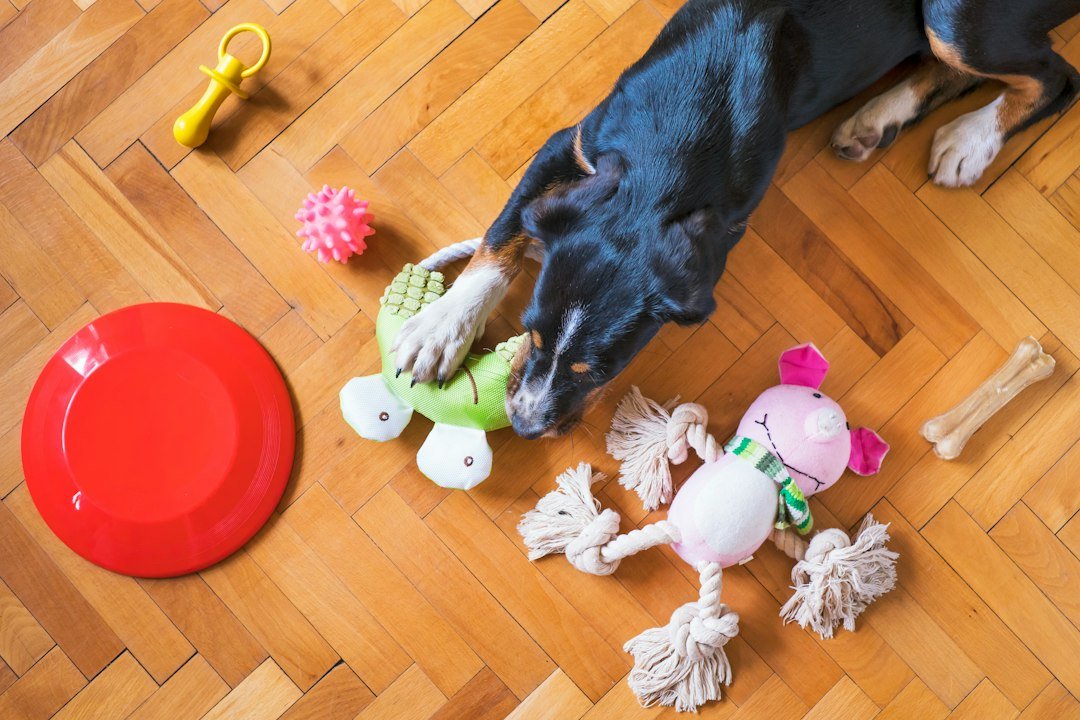
Plush squeaky toys can provide interactive retrieval and light chewing for dogs that prefer soft textures. For small jaws, look for toys labeled for small breeds and with sewn‑in squeakers rather than detachable pieces.
- Durability: plush is not for heavy chewers; replace when torn to prevent ingestion of stuffing.
- Interactive twist: toys that emit small sounds or have pockets for treats combine chew and mental play.
Low‑stimulus toys for anxious or older small dogs
Senior or noise‑sensitive dogs do better with low‑movement, low‑sound toys that encourage slow engagement—soft puzzle pads, scent mats, or slow treat dispensers. These provide enrichment without overstimulation.
Safety, durability and practical buying checks
Always check: choking hazards, non-toxic materials, washable components, and age/size recommendations. For power-driven toys, test them yourself to confirm noise level and motion before giving them to your dog. Keep an eye on wear; small dogs can still damage seams and elastic parts.
How to introduce a new interactive toy
- Make the first session short and positive—use high‑value treats and praise.
- Demonstrate how it works (carry the treat to the puzzle, nudge the moving toy) and reward attempts.
- Gradually extend playtime and remove the toy if the dog becomes frustrated or destructive.
- Rotate toys weekly to maintain novelty and prevent boredom.
When a toy isn’t working: troubleshooting
If your dog ignores a toy, check these likely causes: wrong reward value, wrong complexity level, noise sensitivity, or simply a mismatch with her natural play type. Try switching toy category (e.g., from moving toy to snuffle mat) before discarding the idea of interactive enrichment entirely.
Related reading
For broader small-dog care that matters when choosing toys, see The Ultimate Guide to Caring for Small Dogs and our Small Dog Chew Toys page for more size‑appropriate options.
- Observe whether your dog prefers nose-work, chasing, chewing or problem-solving.
- Confirm toy size fits your dog's muzzle and jaw strength.
- Pick washable materials and inspect for choking hazards.
- Test noise and motion levels before unsupervised use.
- Rotate toys to keep novelty and check for early wear.
The best interactive toys for small dogs are the ones that match a dog's natural instincts and physical constraints: snuffle mats for foragers, puzzle feeders for problem-solvers, soft chews for gentle mouths, and quiet moving toys for chasers. Prioritize size, safety and noise when choosing.
Are puzzle feeders suitable for puppies?
Yes, but use simple puzzles with large openings for young puppies and supervise to avoid frustration; increase difficulty as they grow.
How often should I rotate interactive toys?
Rotate every 1–2 weeks to maintain novelty; keep a couple of favorites available continually for comfort.
Can small dogs use automatic moving toys unsupervised?
No—always supervise use of moving or battery-powered toys to prevent tangles, chewing of parts, or injury from small wheels or motors.
What if my dog destroys soft toys quickly?
Switch to more durable materials (rubber or reinforced fabric), shorten sessions, and remove torn toys immediately to prevent ingestion of stuffing.
Do snuffle mats actually slow eating?
Yes—snuffle mats force dogs to search for kibble, reducing gulping and helping digestion, especially useful for fast eaters.