Wishlist
Quick answer: Which indoor dog activities really work?
The most effective indoor dog activities combine physical movement with mental challenge. For everyday use, rotate fast energy burners (hallway fetch, treadmill), brain builders (puzzle toys, scent games) and calm engagement (massage, chew sessions). This article lists 10 distinct ideas and explains who they suit, how to set them up and safety/practical trade-offs so you can pick the right mix for your dog.
1. Puzzle toys and slow feeders: mental work that rewards
Puzzle feeders force your dog to think for food, extending mealtime and reducing boredom. Use rubber treat-dispensing balls, sliding puzzles, or slow-feeder bowls depending on your dog’s size and problem-solving skill. Start with easy settings and watch for frustration—if your dog gives up quickly, step down the difficulty or partially load the puzzle so they get early wins.
2. Hide-and-seek with treats or toys: scent-driven fun
Hide a favorite toy or small treats around a room while your dog watches, then increase difficulty by hiding with them out of sight. This builds nose work skills and is low-impact physically. For a training twist, reward only when your dog brings the item back or sits on command after finding it.
3. Indoor fetch and controlled chase in narrow spaces
Use a long hallway or cleared room and a soft ball to play short fetch sessions. Keep throws low and under control to avoid slippery floors or airborne collisions. This is best for dogs with high chase drive but it’s tiring on joints—limit to short bursts for young or senior dogs.
4. Tug-of-war with rules: physical and social control
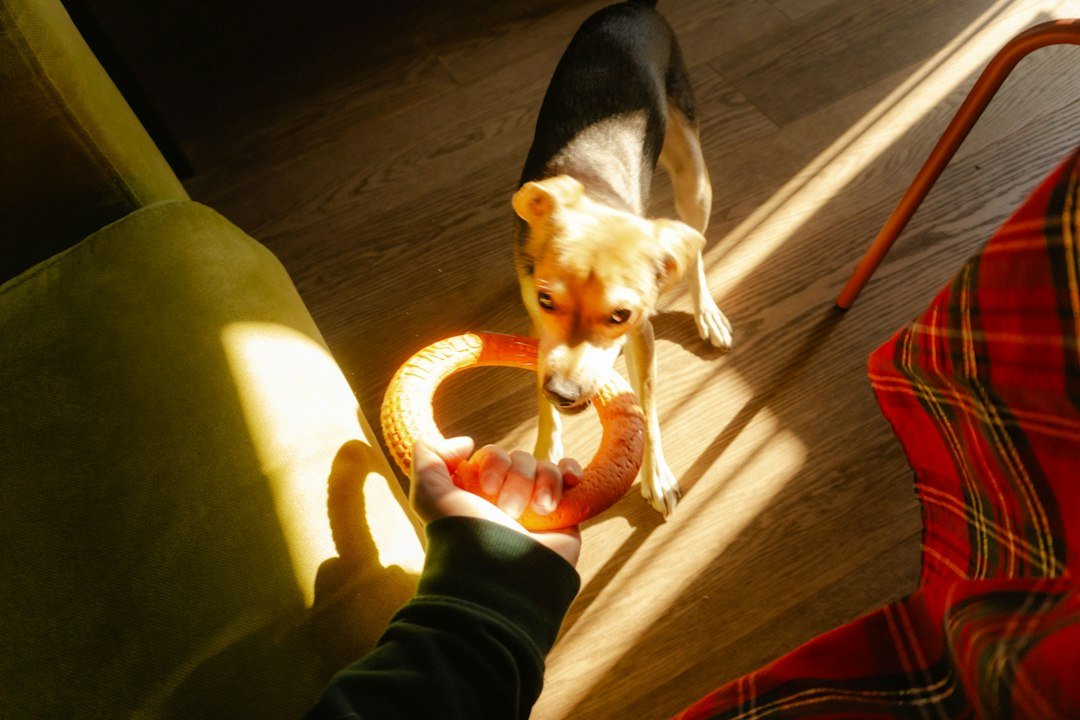
Tug is an excellent outlet for energy and a chance to practice impulse control. Teach a reliable “drop” or “leave it” cue before regular play. Use a sturdy rope toy, play briefly, then end on your terms so the dog learns gentle engagement rather than dominance-based escalation.
5. Scent work with boxes: cheap and scalable brain challenges
Place treats inside one of several boxes or containers and let your dog search. Increase complexity by using identical closed containers or moving the target among rooms. This taps an underused sense and can mentally exhaust dogs more quickly than running.
6. A supervised dog treadmill for structured cardio
When outdoor walks aren’t possible, a treadmill designed for pets provides consistent aerobic exercise. Introduce it gradually—start at a low speed with treats and praise, and never leave a dog unattended. For many indoor setups a compact dog treadmill is a practical investment.
7. Training sessions: short, focused learning blocks
Five-minute training bursts (sit, name recognition, recall, shaping new tricks) are surprisingly tiring mentally and reinforce good behavior. Use high-value treats, keep sessions upbeat, and end while the dog is still engaged. Rotate what you teach to keep novelty high.
8. DIY snuffle mat and bottle toys for quiet enrichment
You can make a snuffle mat with fleece strips tied to a rubber mat or turn old plastic bottles into rolling puzzle toys. These cost-effective options provide nose work and paw manipulation without a lot of supervision. Use durable materials and remove small parts that could be swallowed.
9. Interactive electronic toys for independent play
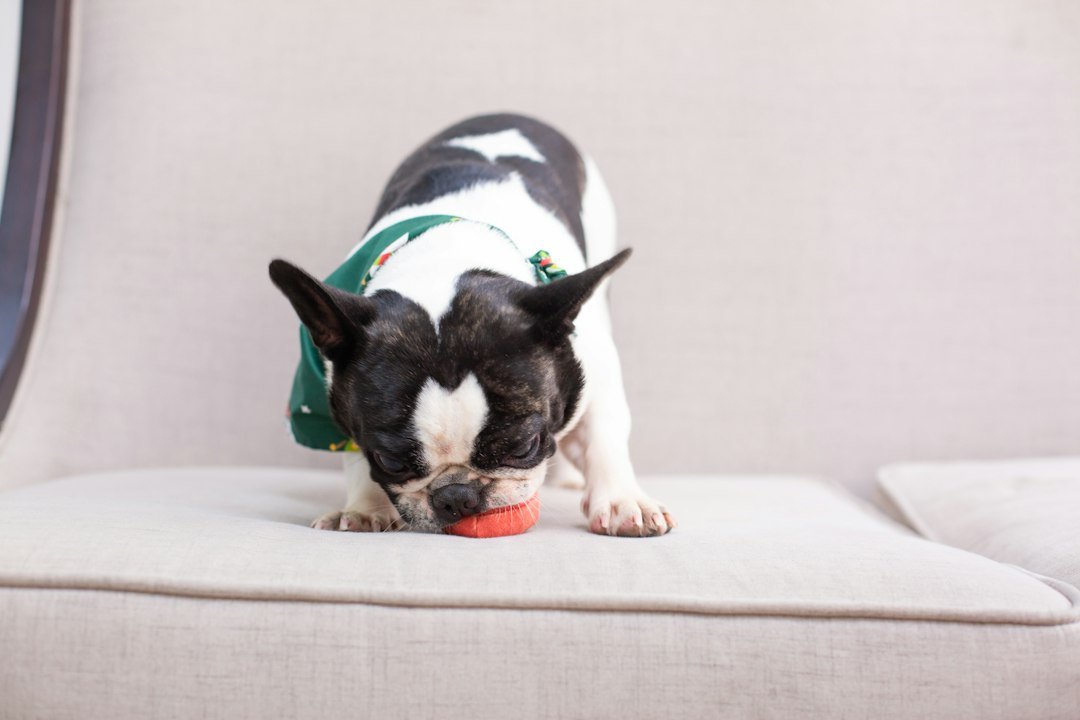
Automatic ball throwers and wobble dispensers can occupy a dog when you can't be hands-on. Choose devices that match your dog’s size and play style and supervise initial sessions to ensure the dog doesn’t become over-excited or frustrated. These are best used in rotation, not as constant background entertainment.
10. Calming activities: massage, chewing, and quiet enrichment
Not every session needs to be high-energy. Long-lasting chews, stuffed Kongs, or gentle massage help anxious or older dogs relax. Chews should be appropriate for your dog’s size and dental health; always supervise to prevent choking on pieces.
Choosing activities based on age, size, and environment
Puppies need frequent mental stimulation and short physical sessions; avoid repetitive high-impact games that strain developing joints. Adult high-energy dogs benefit from treadmill intervals and longer chase play; seniors do best with scent work, gentle training and soft chew enrichment. For small spaces, prioritize scent games, puzzle toys and short training bursts rather than indoor fetch.
Safety and setup checklist for any indoor play
- Remove breakables and secure trip hazards before active play.
- Match toy size and hardness to your dog’s jaws to avoid choking or tooth damage.
- Monitor heat and ventilation for longer sessions—dogs can overheat indoors.
- Rotate toys every few days to maintain novelty and engagement.
- Clear space and hide fragile items.
- Choose appropriate toy sizes and supervise initial use.
- Limit high-impact games for puppies and seniors.
- Rotate activities to keep novelty high.
- Introduce equipment (treadmill, thrower) gradually.
Mix short physical bursts with mentally demanding games and calming enrichment across the week. Start slowly with any new toy or tool, supervise until you know your dog’s reaction, and tailor activities to age, size and living space.
How long should an indoor play session last?
Short sessions of 5–15 minutes work well for mental games; 10–20 minutes for active play depending on fitness and age, with breaks to prevent overheating or overstimulation.
Are puzzle toys safe for chewers?
Only choose puzzle toys rated for chewing strength; supervise aggressive chewers and replace toys that show bite-throughs to avoid swallowing hazards.
Can I use a people treadmill for my dog?
It’s not ideal—dog-specific treadmills have safety features and appropriate belt speeds. If you must use a human treadmill, take extra precautions and avoid unsupervised sessions.
How often should I rotate my dog’s toys?
Rotate every 3–7 days to maintain interest; keep a stash and reintroduce toys after a break to renew novelty.
What if my dog gets frustrated with a puzzle?
Lower the difficulty, show the solution, or partially pre-load the toy so the dog experiences success and stays motivated.